Sleeping With a Fan On: Benefits, Downsides, and Smart Tips
Is sleeping with a fan on bad for you? For most people it's safe and keeps you cool. Learn the benefits, downsides like dry eyes, and how to use a fan right.
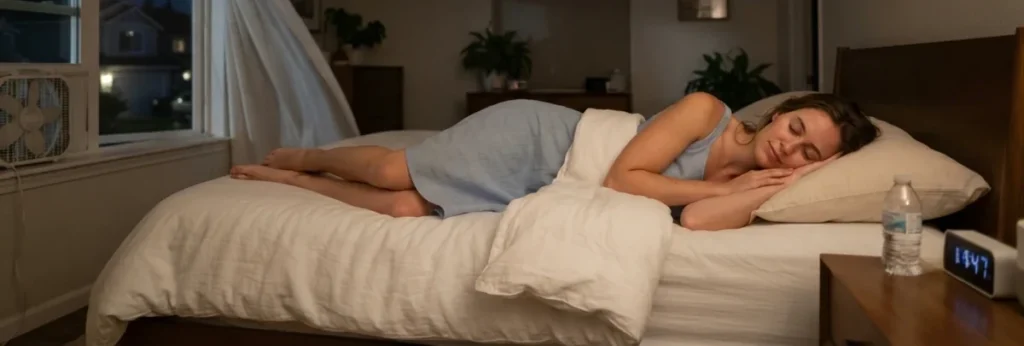
For a lot of people, the whir of a fan is the sound of bedtime. It keeps the room from feeling stuffy, drowns out the dog next door, and makes the sheets feel cool. Some people can’t fall asleep without it, even in the middle of winter. But you may have heard that sleeping with a fan on can dry you out, stir up allergies, or even make you sick.
So is sleeping with a fan on bad for you? For most healthy adults, no. Here’s what the research says about the benefits, the real downsides, and how to set up a fan so it helps your sleep instead of working against it.
Quick Summary
- It’s generally safe. The Sleep Foundation says sleeping with a fan on is fine for most people and can keep a bedroom cooler and less stuffy.
- The main downsides are dryness, dust, and noise. Moving air can dry your eyes and nose and spread dust or pollen around the room.
- Set it up smart. Keep the fan clean, don’t point it straight at your face, use a low setting, and try a timer.
Is It Bad to Sleep With a Fan On?
Not for most people. A fan doesn’t cool the air the way an air conditioner does, but it moves air across your skin, which helps your body shed heat. That matters because your core temperature naturally drops as you fall asleep, and a room that’s too warm can make it harder to drift off and stay asleep.
The Sleep Foundation puts the ideal bedroom temperature at about 65°F, with most doctors recommending somewhere between 65 and 68 degrees. A fan is one of the cheapest ways to get closer to that range, especially if you sleep hot or share a bed. If you want the full picture on room temperature, see our guide on the best temperature for sleep.
That said, a fan isn’t perfect for everyone. People with allergies, asthma, dry eyes, or very light sleep may notice some downsides.

Benefits of Sleeping With a Fan On
It helps you stay cool
This is the big one. If you tend to wake up sweaty or kick off the covers at 2 a.m., steady airflow can make a real difference. A fan is also handy when you share a bed with someone who likes the room warmer than you do. Point a small fan toward your side of the bed and you both get what you want. Our tips on how to stop overheating at night cover more ways to cool down.
It makes a steady background sound
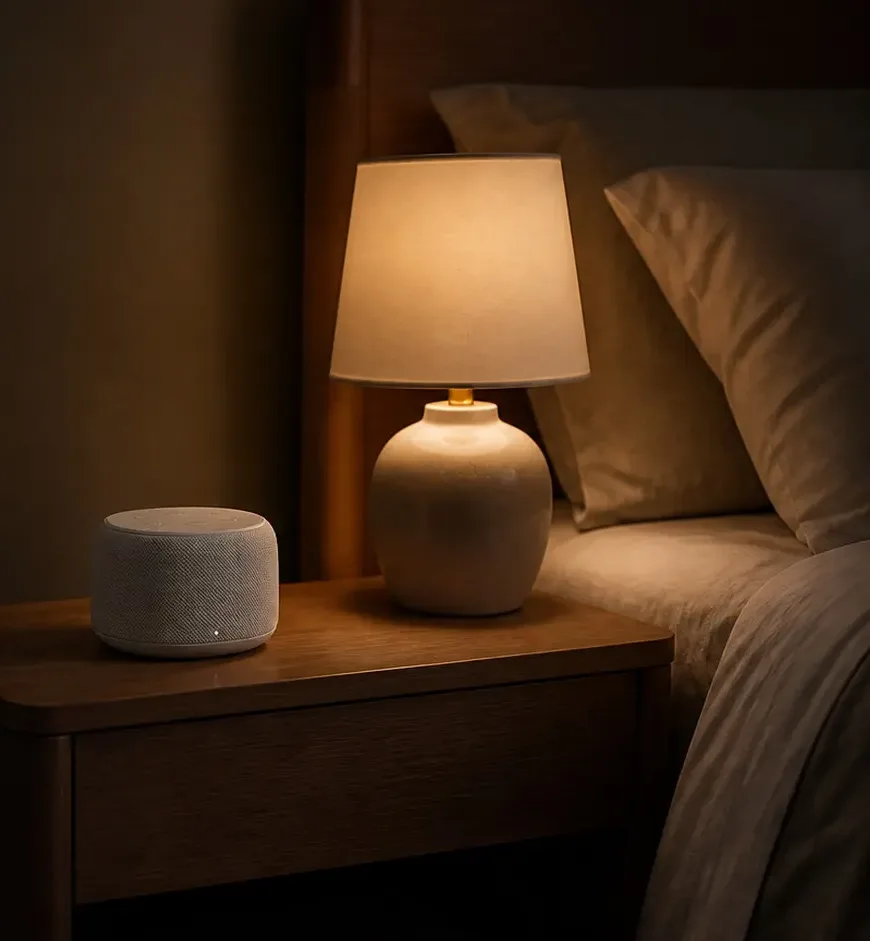
Many people love a fan for the noise as much as the breeze. A constant, low hum can mask sudden sounds like traffic, a snoring partner, or a creaky house. The Sleep Foundation explains that one theory behind white noise is simple masking: steady sound makes sudden noises less jarring. In one study it cites, people living in a noisy part of New York City fell asleep faster and spent more of their time in bed asleep while listening to white noise.
If you like the sound but not the breeze, a white noise machine can give you the same effect. Learn the difference between white, pink, and brown noise to find the sound you like best.
It keeps the air from feeling stale
A closed bedroom can feel stuffy by morning. A fan keeps air moving, and pairing it with a slightly open door or window brings in fresh air. We cover the pros and cons of that in our guide to sleeping with the window open.
It may help protect babies
This one surprises a lot of parents. In a California study published in Archives of Pediatrics & Adolescent Medicine, fan use during sleep was linked to a 72% lower risk of sudden infant death syndrome (SIDS). The link was strongest in warmer rooms and other less-than-ideal sleep setups. This was an observational study, so it doesn’t prove a fan prevents SIDS, and it’s never a substitute for safe sleep basics like placing your baby on their back on a firm, flat surface with no loose bedding. Keep any fan well out of a child’s reach, too.
Downsides of Sleeping With a Fan On
Dry eyes, nose, and mouth
Moving air speeds up evaporation, so a fan blowing on your face all night can leave your eyes, nose, throat, or skin feeling dry. The American Academy of Ophthalmology lists wind and very dry air among the things that can make dry eye worse, and suggests adding moisture to the air with a humidifier in winter. If you wake up with gritty eyes or a scratchy throat, turn the fan away from your face or lower the speed.
Dust and allergies
A fan can’t create allergens, but it can spread the ones already in your room. The Sleep Foundation notes that fans can circulate dust, pollen, and pet dander, which may bother people with allergies and can worsen congestion, snoring, or asthma symptoms. Dust also builds up on the blades, so a dirty fan blows a little dust around every time it spins.
Stiff or sore muscles
Some people say cold air blowing directly on them all night leaves their neck or shoulders feeling stiff in the morning. There isn’t strong research on this, but if you notice it, aim the fan at the room instead of at your body, or use an oscillating fan so the airflow isn’t constant.
Noise that’s too much
The same hum that relaxes one person drives another up the wall. The Sleep Foundation points out that noise as low as 48 decibels, and possibly as low as 33 decibels, can affect sleep. For comparison, a soft whisper is about 30 decibels. If you keep waking up or feel unrested, your fan may be too loud. Try a lower speed or a quieter model.
Can a fan make you sick?
No. Colds and the flu are caused by viruses, not by moving air. A fan can make you feel more stuffed up if you’re already sick, though, because dry air irritates your nose and throat. If you’re under the weather, our guide on how to sleep when you’re sick has more tips.
How to Sleep With a Fan On the Right Way
You don’t have to choose between a cool room and a comfortable night. These simple tweaks cut down on most of the downsides:
- Keep it a few feet away. Place the fan across the room or at the foot of the bed so you feel a gentle breeze, not a direct blast.
- Don’t aim it at your face. Point it at your body or the room to reduce dry eyes and a dry nose.
- Clean the blades often. The Sleep Foundation recommends cleaning your fan regularly, including the blades, to cut down on dust. Every couple of weeks is a good habit, more often if you have pets.
- Use the lowest setting that keeps you comfortable. It’s quieter and gentler on your eyes and skin.
- Try a timer. If you only need the fan to fall asleep, set it to shut off after an hour or two.
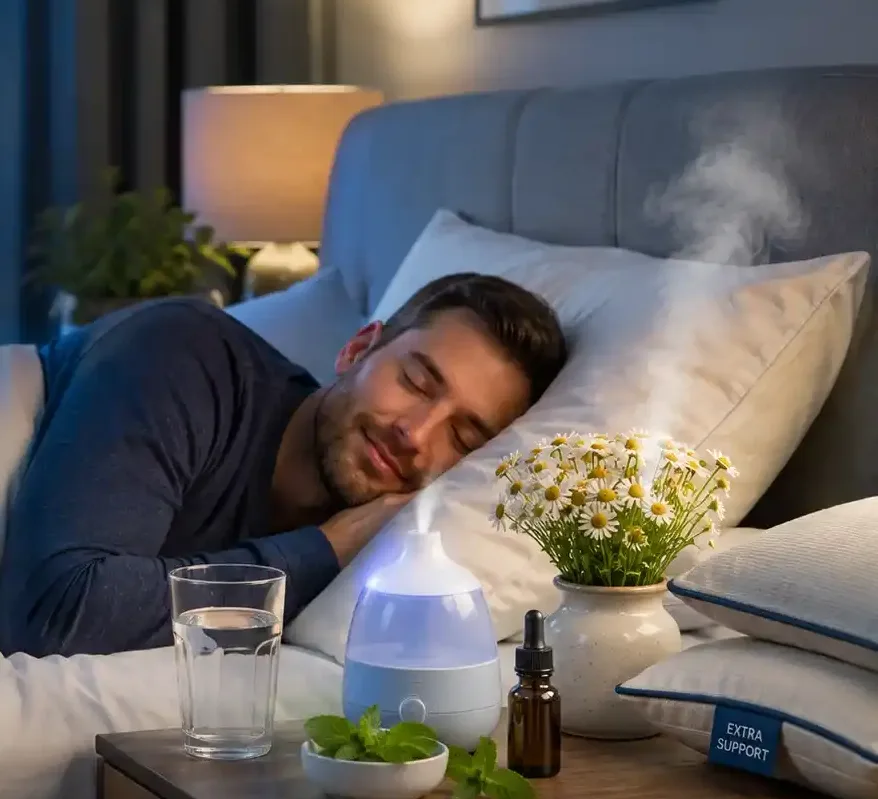
- Add moisture if the air feels dry. In winter, running a humidifier alongside the fan can help. Here’s what to know about sleeping with a humidifier.
- Keep your bedroom clean. Washing your sheets weekly and vacuuming often means there’s less dust for the fan to stir up.
Can You Sleep With a Fan On in Winter?
Yes, and plenty of people do. In winter, the fan is usually more about sound and airflow than cooling. If the room already feels chilly, put the fan on its lowest setting and point it away from the bed, or switch to a white noise machine so you get the sound without the breeze. If you love the hum but tend to feel cold at night, pair it with warm bedding. Our guide on how to stay warm in bed has easy ideas.
Who Should Skip the Fan
A fan is a great tool, but it may not be the best choice if you:
- Have allergies or asthma that flare at night, especially if you can’t keep the room and fan very clean
- Wake up with dry eyes, a dry mouth, or nosebleeds
- Are a very light sleeper who finds the noise distracting
- Feel cold easily or are caring for an older adult who needs a warmer room
In those cases, try cooling the room other ways: lower the thermostat, use breathable cotton sheets, close the blinds during the day, or take a warm shower an hour or two before bed. For more ideas, see our list of ways to sleep better in hot weather.
FAQ: Sleeping With a Fan On
Is it healthy to sleep with a fan on every night?
For most people, yes. It’s safe to use a fan nightly as long as you keep it clean and it doesn’t leave you with dry eyes, congestion, or a stiff neck.
Why can’t I sleep without a fan?
Many people get used to the steady sound and airflow. The hum masks other noises, and over time your brain links it with sleep. That’s not a problem, but a small white noise machine can be handy for travel.
Is it better to sleep with a fan or the AC on?
Air conditioning actually lowers the room temperature, while a fan only moves air. On very hot nights, AC (or AC plus a fan) usually works better. On mild nights, a fan alone is often enough and costs less to run.
Should a fan blow directly on you while you sleep?
It’s better not to. A gentle breeze nearby keeps you cool without drying out your eyes and nose. Aim it at your body or the room rather than your face.
Is it safe to leave a fan on all night?
Most modern fans are designed to run for long periods. Keep the cord in good shape, don’t cover the fan, and keep it away from bedding, curtains, and kids’ reach.
This article is for general information only and isn’t a substitute for medical advice. If you have asthma, allergies, or ongoing dry eye, talk with your healthcare provider about what’s best for your bedroom. For babies, always follow safe sleep guidance from your pediatrician.
General guidance, not medical advice. If a sleep problem persists or gets worse, speak to a qualified clinician. Medical disclaimer