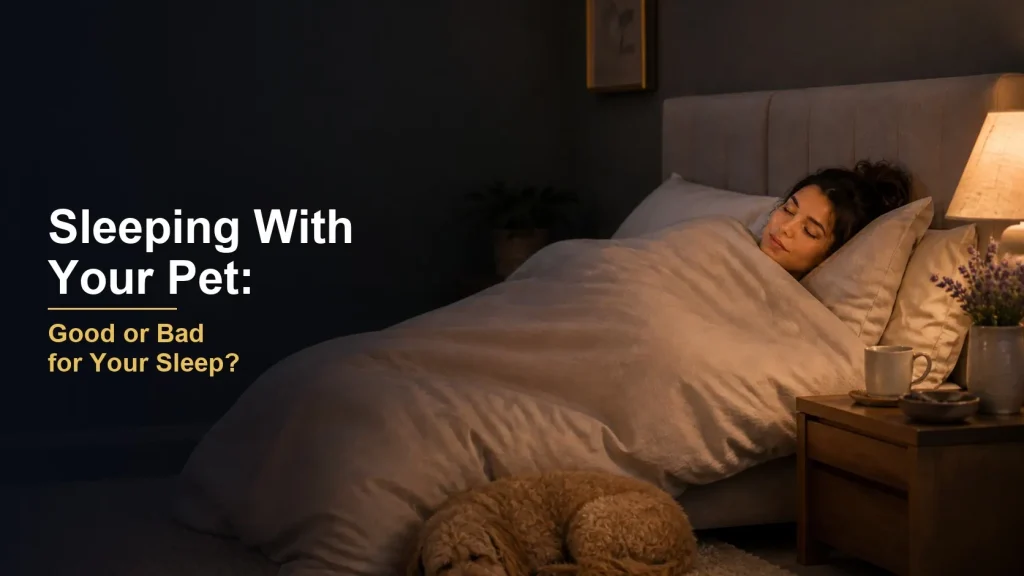
For many of us, there’s nothing cozier than a dog curled at our feet or a cat purring beside us as we drift off. But is sharing your bed with a furry friend actually good for your sleep — or is it quietly sabotaging your rest? The honest answer is: it depends. Here are the real pros and cons, and how to make it work.
The Case for Sleeping With Your Pet
There are genuine benefits, which is why so many people happily share their bed: For a wider look at the underlying science, see published guidance.
Comfort and security. A pet’s presence can be deeply soothing, providing a sense of safety and companionship that helps some people relax and feel less anxious at bedtime.
Reduced stress and loneliness. Cuddling a pet can lower stress and ease feelings of loneliness, and that calmer, happier state can support better sleep. For people who live alone, a pet in the room can be especially comforting.
Warmth and bonding. There’s real coziness in a warm pet nearby, and the closeness strengthens the bond you share — something many owners deeply value.
Interestingly, some research has found that many people feel their pet in the bedroom (though not necessarily in the bed) helps rather than harms their sleep.
The Case Against It
There are real downsides too, especially for lighter sleepers:
Disrupted sleep. Pets move, reposition, scratch, and make noise through the night, and their sleep cycles don’t match ours. These disturbances can fragment your sleep, even if you don’t fully wake up.
Allergies and hygiene. Pets bring dander, pollen, and outdoor dirt into the bed, which can aggravate allergies and asthma and generally make your sleep space less clean.
Space and comfort. A surprisingly large dog (or a cat determined to sprawl) can leave you clinging to the edge of the mattress, cramped and unable to move freely.
Reinforcing habits. Once a pet is used to the bed, it can be hard to change, and some pets become restless or demanding about it.
So, Should You Do It?
There’s no universal right answer — it comes down to you and your pet. If you sleep soundly with your companion nearby, wake up rested, and don’t have allergies, there’s no reason to banish them. But if you’re a light sleeper, wake frequently, have allergies, or simply aren’t sleeping well, your pet may be a hidden culprit worth addressing. Pay attention to your actual sleep quality rather than just the coziness factor.
How to Make It Work
If you love having your pet close but want to protect your sleep, try these compromises: give your pet its own bed on the floor of your room — many people get the comforting presence without the in-bed disruption. Keep your bedding clean and wash it often, and consider an air purifier if allergies are mild. Groom your pet regularly to reduce dander and dirt. Set gentle boundaries (like a designated spot on the bed) if you do share. And if allergies or poor sleep persist, keeping pets out of the bedroom entirely may be the healthiest choice.
The Bottom Line
Sleeping with your pet can be genuinely comforting — offering security, reduced stress, and a stronger bond — but it can also disrupt your sleep and stir up allergies, particularly for light sleepers. There’s no one-size-fits-all answer: let your own sleep quality be the guide. If it works for you, enjoy the cuddles; if it doesn’t, a cozy pet bed nearby often gives you the best of both worlds.
Related reading: the bedroom setup guide and calmer ways to fall asleep.
Frequently Asked Questions
Is it bad to sleep with your pet?
Not necessarily. Many people find it comforting and sleep well with a pet nearby, gaining benefits like reduced stress and a sense of security. But it can disrupt sleep and worsen allergies for some, especially light sleepers, so it depends on you and your pet.
What are the benefits of sleeping with your dog or cat?
Benefits can include comfort and a sense of security, reduced stress and loneliness, warmth, and a stronger bond. Some research suggests having a pet in the bedroom (if not the bed) helps many people feel more relaxed at bedtime.
Can sleeping with a pet disrupt your sleep?
Yes, it can. Pets move, scratch, and make noise on their own sleep schedule, which can fragment your sleep even without fully waking you. They can also bring allergens into the bed and take up space, affecting your comfort.
Should I let my pet sleep in my bed or in its own bed?
If you sleep well and have no allergies, sharing your bed is fine. If your sleep suffers, giving your pet its own bed on your bedroom floor is a great compromise — you keep the comforting presence without the in-bed disruptions.
Is sleeping with pets bad for allergies?
It can be. Pets carry dander, pollen, and dirt that can aggravate allergies and asthma when they’re in your bed. Washing bedding often, grooming your pet, using an air purifier, or keeping pets out of the bedroom can help if allergies are an issue.

Michael Reeves covers topics related to sleep quality, bedroom comfort, and modern lifestyle habits. He enjoys researching sleep products, recovery routines, and productivity-focused wellness practices to create informative and reader-friendly content. Michael writes about bedroom setup, recovery, and the connection between sleep quality and how you feel during the day.
All guides by Michael ReevesGeneral guidance, not medical advice. If a sleep problem persists or gets worse, speak to a qualified clinician. Medical disclaimer