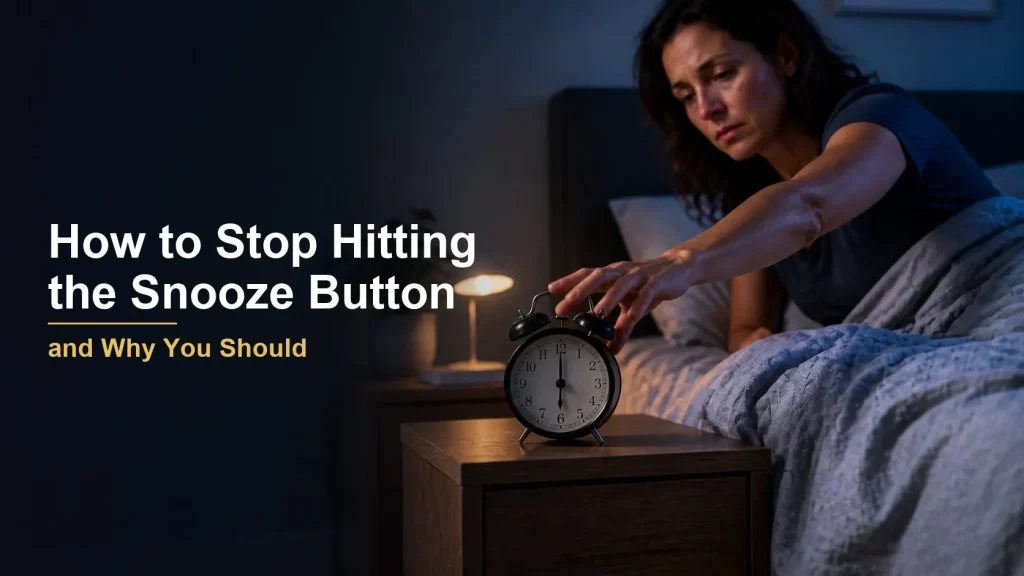
The alarm goes off, your hand shoots out, and — just nine more minutes. Then again. And again. If the snooze button is your morning nemesis, you’re far from alone. But those extra minutes aren’t doing what you think they are. Here’s why snoozing actually makes you feel worse, and how to finally break the habit.
Why Snoozing Backfires
It feels like snoozing gives you a little bonus rest — but it usually does the opposite. For a wider look at the underlying science, see this overview.
It fragments your sleep. The few minutes you get between alarms are shallow, broken, and low-quality. Your body can even start drifting into a new sleep cycle it has no chance of finishing, which leaves you feeling worse, not better.
It worsens grogginess. That heavy, foggy feeling when you wake is called sleep inertia. Repeatedly dozing off and being jolted awake by another alarm can deepen and prolong it, so you start your day groggier than if you’d just gotten up the first time.
It confuses your body clock. The stop-start cycle sends mixed signals to your body about whether it’s time to sleep or wake, making the transition harder rather than easier.
In short, hitting snooze trades genuine rest for a groggy, fragmented start — the worst of both worlds.
Why We Do It Anyway
Understanding why you snooze helps you fix it. Usually it comes down to one big thing: you’re not getting enough sleep, so your body desperately grabs at any extra minutes. It can also be a sign you’re waking mid-deep-sleep, that you dread the day ahead, or simply that your bed is warm and cozy and the room is cold and dark. Most snoozing is a symptom of a sleep or motivation issue, not a habit to be white-knuckled away.
How to Stop Hitting Snooze
1. Get enough sleep
This is the root fix. If you’re well-rested, getting up is far easier — you snooze because you’re sleep-deprived. Work backward from your wake time and go to bed early enough to get a full night.
2. Keep a consistent wake time
Waking at the same time every day (yes, weekends too) trains your body clock to have you naturally alert at that time, so the alarm is a formality rather than a battle.
3. Move your alarm across the room
The simplest trick there is: put your phone or alarm somewhere you have to physically get out of bed to turn it off. Once you’re up and standing, the urge to crawl back in fades fast.
4. Let in light immediately
Light is your body’s wake-up signal. Open the curtains the moment you’re up, or use a sunrise alarm clock that brightens gradually — light helps switch off melatonin and shake the grogginess.
5. Give yourself a reason to get up
A morning you look forward to — good coffee, a few quiet minutes, a workout, a favorite podcast — makes leaving the bed far more appealing than another nine foggy minutes.
6. Commit to zero snoozes
Decide, firmly, that you get up on the first alarm — no negotiations. Set your alarm for the time you actually need to rise, not 30 minutes early “to snooze,” and honor it. Get up and move: stand, stretch, splash your face with water.
The Bottom Line
Hitting snooze doesn’t give you meaningful rest — it hands you fragmented, low-quality sleep and deeper grogginess. The real fix is to get enough sleep and keep a consistent wake time, then make getting up easier: move the alarm across the room, let in light immediately, and give yourself something to look forward to. Commit to rising on the first alarm, and you’ll trade groggy, broken mornings for a clearer, calmer start to your day.
Related reading: the bedroom setup guide and calmer ways to fall asleep.
Frequently Asked Questions
Why is hitting the snooze button bad?
Snoozing gives you fragmented, low-quality sleep between alarms and can deepen “sleep inertia,” the groggy feeling on waking. Repeatedly dozing and being jolted awake leaves you feeling worse, not more rested, and confuses your body clock.
Why can’t I stop hitting snooze?
Usually because you’re not getting enough sleep, so your body grabs at extra minutes. It can also mean you’re waking during deep sleep, dread the day, or simply love your cozy bed. It’s typically a symptom of a sleep or motivation issue.
Does snoozing give you extra rest?
Not really. The minutes between alarms are shallow and broken, and your body may start a new sleep cycle it can’t finish, which increases grogginess. It feels restful but generally leaves you more tired than getting up the first time.
How do I stop hitting snooze in the morning?
Get enough sleep, keep a consistent wake time, and move your alarm across the room so you have to get up to turn it off. Let in light immediately, give yourself something to look forward to, and commit to getting up on the first alarm.
Should I set my alarm earlier so I can snooze?
No — that just builds in fragmented, low-quality sleep. Set your alarm for the time you actually need to get up, and rise on the first ring. You’ll get better-quality rest until that point and feel less groggy.

Sophia Bennett specializes in wellness and lifestyle content with a focus on sleep-related topics, stress management, and healthy routines. She creates easy-to-understand articles designed to help readers make more informed sleep and wellness decisions. Sophia covers the wellness side of sleep, stress, mental wellbeing, and the lifestyle changes that make rest more restorative.
All guides by Sophia BennettGeneral guidance, not medical advice. If a sleep problem persists or gets worse, speak to a qualified clinician. Medical disclaimer