Revenge Bedtime Procrastination: Why We Stay Up Late (and How to Stop)
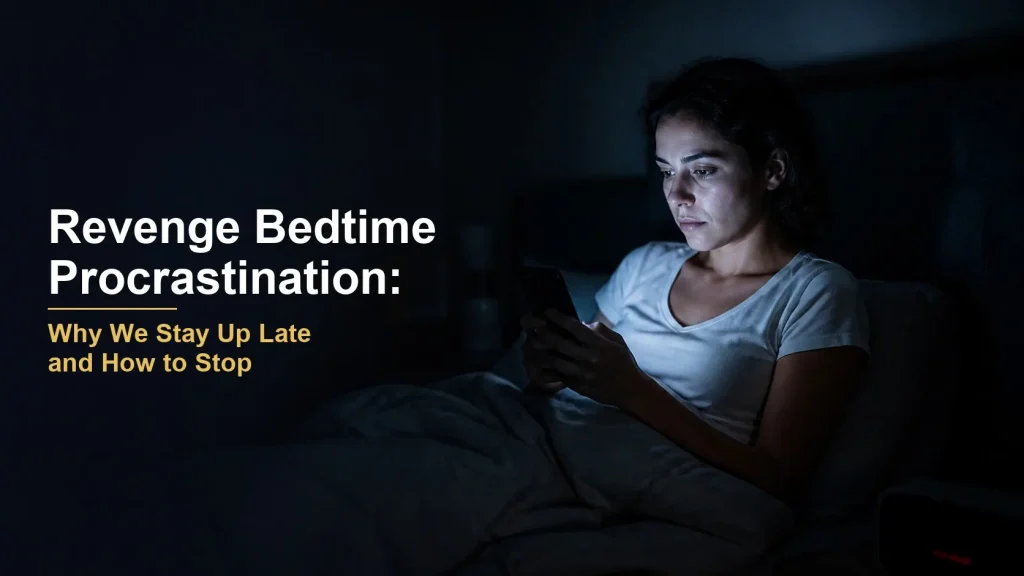
You’re exhausted. You know you should sleep. And yet there you are at 1am, scrolling, watching one more episode, or just enjoying the quiet — actively choosing not to go to bed. If this sounds familiar, you’re experiencing something with a name: revenge bedtime procrastination. Here’s what it is, why we do it, and how to break the cycle.
What Is Revenge Bedtime Procrastination?
Revenge bedtime procrastination is the habit of staying up late — sacrificing sleep — to reclaim personal free time you didn’t get during the day. The “revenge” is against a busy, over-scheduled life: when your waking hours feel consumed by work and responsibilities, those late-night hours become the only time that feels truly yours. So you delay bedtime, not because you’re not tired, but because you’re unwilling to give up that hard-won pocket of freedom. For a wider look at the underlying science, see this overview.
The term took off online because it struck such a chord, especially with busy professionals, parents, and anyone whose days leave little room for themselves.
Why We Do It
At its heart, revenge bedtime procrastination is about a lack of control and personal time during the day. When every hour is spoken for, staying up late is a way of clawing back autonomy and leisure. A few things fuel it: stress and burnout that leave you craving decompression, the endless pull of phones and streaming, and a blurred line between work and home (especially with remote work). It’s less a sleep disorder and more a symptom of an unbalanced, overstretched life.
Why It’s a Problem
The trouble is the cost. That late-night “me time” is borrowed against tomorrow — you wake up shattered, and chronic sleep loss piles up, affecting your mood, focus, health, and, ironically, your ability to enjoy anything. It becomes a vicious cycle: you’re too drained during the day to feel you’ve had personal time, so you stay up again to get it, and lose even more sleep. Breaking it means addressing the real problem: not enough restorative downtime in your actual day.
How to Stop Revenge Bedtime Procrastination
1. Build “me time” into your day
The most powerful fix is to reclaim personal time before bedtime. Deliberately schedule small pockets of leisure into your day — a proper lunch break, a walk, a hobby, quiet time — so you don’t arrive at night feeling starved of freedom and needing to “steal” it from your sleep.
2. Set a wind-down alarm
Just as you set an alarm to wake up, set one to start winding down. A gentle nudge an hour before bed helps you transition rather than suddenly realizing it’s 1am.
3. Make your evenings intentional
If you want to relax in the evening, do it earlier and more consciously — enjoy your show or your book at 9pm rather than defaulting to mindless midnight scrolling. Give yourself permission to relax before it eats into sleep.
4. Curb the phone
Screens are the number-one enabler of “just five more minutes.” Keep your phone out of the bedroom, set an app timer, or charge it in another room so it’s not the thing pulling you past your bedtime.
5. Protect your bedtime like an appointment
Treat your bedtime as a non-negotiable commitment to yourself — because good sleep is self-care, not the opposite of it. Reframing sleep as something you deserve, rather than a chore stealing your fun, changes everything.
The Bottom Line
Revenge bedtime procrastination — staying up late to reclaim personal time — is incredibly common, and it’s really a sign that your days don’t hold enough space for you. The lasting fix isn’t just willpower at midnight; it’s building genuine downtime into your daytime, making your evenings intentional, curbing late-night screens, and treating your bedtime as an act of self-care. Reclaim your time earlier in the day, and you won’t need to steal it from your sleep.
Screens make the delay worse; this screen-time guide is the practical side. If the delay is mostly worry, this quieter-mind walkthrough is a better fit.
Frequently Asked Questions
What is revenge bedtime procrastination?
It’s the habit of staying up late and sacrificing sleep to reclaim personal free time you didn’t get during a busy day. The “revenge” is against an over-scheduled life — those late hours feel like the only time that’s truly your own.
Why do I stay up late even when I’m exhausted?
Usually because your day left little time for yourself, so you delay bedtime to claw back some personal freedom and decompression. Stress, burnout, and the pull of phones and streaming all make it worse. It’s often a sign of an unbalanced schedule rather than a sleep problem.
Is revenge bedtime procrastination bad for you?
It can be, because the late-night time comes at the cost of sleep. Over time, chronic sleep loss harms your mood, focus, and health, and creates a cycle where daytime exhaustion drives you to stay up again for “me time.” Breaking it protects your wellbeing.
How do I stop revenge bedtime procrastination?
Build genuine personal time into your day so you don’t crave it at night, set a wind-down alarm, relax intentionally earlier in the evening, keep your phone out of the bedroom, and treat your bedtime as a non-negotiable act of self-care.
Is revenge bedtime procrastination a real thing?
Yes. While it’s not a formal medical diagnosis, it’s a widely recognized behavior pattern that resonated with millions online, particularly busy professionals and parents. It describes a very real and common struggle with protecting sleep.

Sophia Bennett specializes in wellness and lifestyle content with a focus on sleep-related topics, stress management, and healthy routines. She creates easy-to-understand articles designed to help readers make more informed sleep and wellness decisions. Sophia covers the wellness side of sleep, stress, mental wellbeing, and the lifestyle changes that make rest more restorative.
All guides by Sophia BennettGeneral guidance, not medical advice. If a sleep problem persists or gets worse, speak to a qualified clinician. Medical disclaimer