The Best Sleeping Position for Better, Pain-Free Sleep
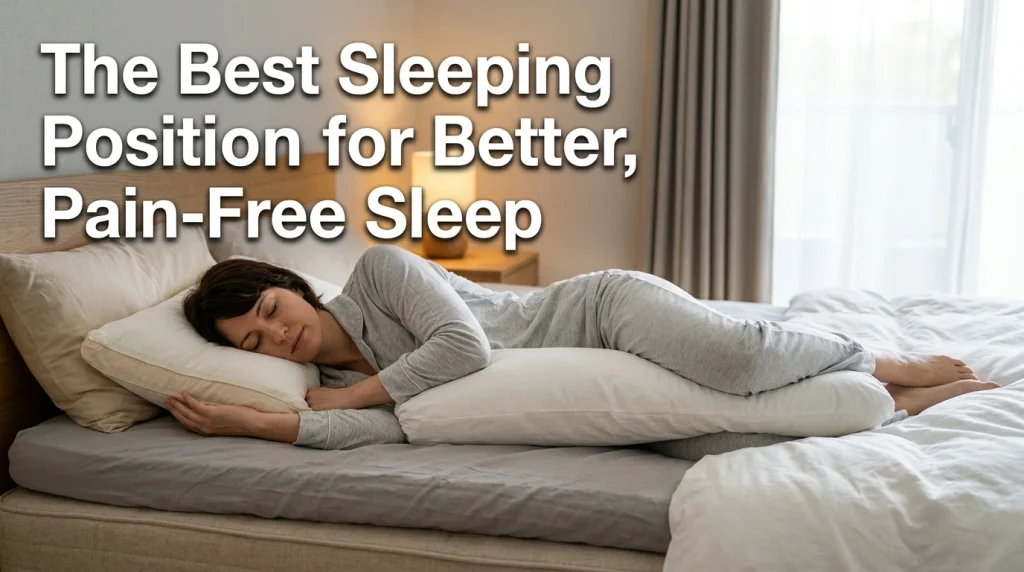
You spend about a third of your life asleep and the position you spend it in quietly shapes how your body feels in the morning. The right sleep posture can ease back pain, quiet snoring, and protect your spine; the wrong one can leave you stiff, sore, and groggy.
So what’s the best sleeping position? Here’s how side, back, and stomach sleeping really compare, plus the best position for specific issues like back pain, snoring, and acid reflux.
The Quick Answer
There’s no single “perfect” position for everyone, but the experts broadly agree on this: sleeping on your side or back is generally healthier than sleeping on your stomach. Both make it easier to keep your spine aligned and supported, which lets your muscles relax and recover overnight. The best position, ultimately, is the one that keeps your spine neutral and lets you sleep comfortably through the night. For a wider look at the underlying science, see this overview.
Let’s break down each one.
Side Sleeping
Side sleeping is the most common position and for most people, the best all-rounder. It keeps the spine naturally aligned, helps relieve back pain, and reduces snoring and sleep apnea symptoms by keeping your airway open. Sleeping on your left side in particular can ease acid reflux and is widely recommended during pregnancy for healthy circulation.
The catch: it can sometimes cause shoulder soreness, and pressing your face into the pillow night after night may contribute to facial wrinkles.
Make it better: place a pillow between your knees to keep your hips and spine aligned, and avoid curling up too tightly into a hard fetal position, which can strain your neck and lower back.
Back Sleeping
Sleeping on your back is excellent for spinal alignment and posture it distributes your weight evenly and reduces pressure points. It also keeps your face off the pillow, which is best for preventing wrinkles and skin compression.
The catch: it’s the worst position for snoring and obstructive sleep apnea, because gravity lets the tongue and soft tissue fall back and narrow the airway. It can also worsen acid reflux for some people.
Make it better: tuck a pillow under your knees to support the natural curve of your lower back. If you snore or have reflux, slightly elevating your upper body with a wedge pillow or adjustable base can help a lot.
Stomach Sleeping
Stomach sleeping is the least common position, and most experts gently suggest moving away from it. On the plus side, it can reduce snoring. But the drawbacks usually outweigh that: it forces your head to turn to one side all night (straining your neck) and flattens the natural curve of your spine (straining your lower back).
Make it better: if you can’t sleep any other way, use a very thin pillow or none at all under your head, and slip a flat pillow under your pelvis to take pressure off your lower back. Over time, try transitioning to your side using a body pillow for support.
The Best Position for Specific Needs
For back pain: side sleeping with a pillow between your knees, or back sleeping with a pillow under your knees. Both keep the spine neutral.
For snoring and sleep apnea: side sleeping is best, as it keeps the airway open. Avoid sleeping flat on your back.
For acid reflux or heartburn: sleep on your left side, and consider raising the head of the bed slightly. Avoid lying flat right after eating.
For pregnancy: sleeping on your side especially the left supports healthy blood flow to you and your baby. A pillow between the knees and under the bump adds comfort.
For neck pain: side or back sleeping with a pillow that keeps your neck level with your spine not too high, not too flat. Stomach sleeping tends to make neck pain worse.
How to Actually Change Your Sleep Position
Switching positions takes patience, because you drift back to old habits while unconscious. Strategic pillows are your best tool: a body pillow to hug encourages side sleeping, a pillow wall behind your back discourages rolling over, and knee or pelvis pillows keep your spine supported. Some people even sew a tennis ball into the back of a shirt to discourage rolling onto their back. Give any change a couple of weeks it feels strange at first, then becomes normal.
And don’t forget your pillow and mattress: the right support for your chosen position matters just as much as the position itself.
The Bottom Line
The best sleeping position is one that keeps your spine aligned from hips to head while letting you sleep comfortably. For most people that means side sleeping (great all-rounder, best for snoring, reflux, and pregnancy) or back sleeping (best for spinal posture), with stomach sleeping the least ideal. Match your position to your needs, support it with the right pillows, and you’ll likely wake up feeling noticeably better. If you have chronic pain, heavy snoring, or a sleep disorder, a doctor or sleep specialist can help you dial it in.
Frequently Asked Questions

Michael Reeves covers topics related to sleep quality, bedroom comfort, and modern lifestyle habits. He enjoys researching sleep products, recovery routines, and productivity-focused wellness practices to create informative and reader-friendly content. Michael writes about bedroom setup, recovery, and the connection between sleep quality and how you feel during the day.
All guides by Michael ReevesGeneral guidance, not medical advice. If a sleep problem persists or gets worse, speak to a qualified clinician. Medical disclaimer