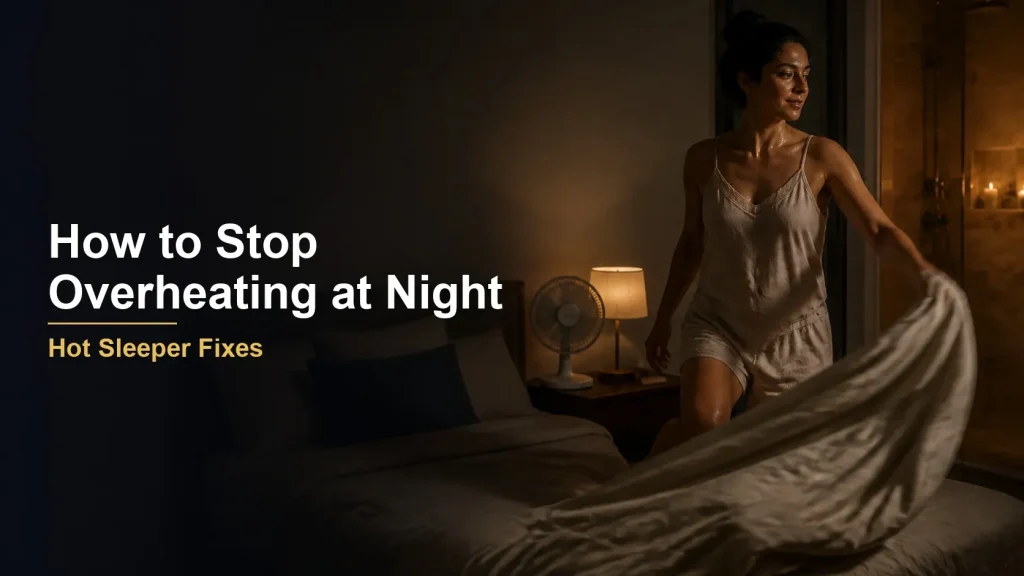
Kicking off the covers, flipping to the cool side of the pillow, waking up damp and restless — if you run hot at night, you know how much it wrecks your sleep. Overheating fights against your body’s natural sleep process, but the causes are usually fixable. Here’s why you overheat at night, and how to finally cool down.
This article is general information, not medical advice. For persistent or drenching night sweats, please see a doctor.
Why Overheating Ruins Sleep
To fall and stay asleep, your body naturally lowers its core temperature — it’s one of the key signals that it’s time to rest. When you overheat, you’re working directly against that process, which makes it harder to fall asleep and pulls you into lighter sleep or full awakenings. So staying cool isn’t just about comfort; it’s central to sleeping well. For a wider look at the underlying science, see published guidance.
Why You’re So Hot at Night
Several things can leave you overheating, and identifying yours points to the fix:
Heat-trapping bedding and mattress. Memory foam mattresses, synthetic or microfiber sheets, and heavy duvets all trap heat against your body.
A warm or stuffy room. A bedroom that’s too warm or poorly ventilated has nowhere for your body heat to go.
Warm sleepwear. Synthetic or thick pajamas hold heat in rather than letting it escape.
Hormones. Menopause and perimenopause (night sweats), pregnancy, and points in the menstrual cycle can all raise body temperature at night.
Evening habits. Alcohol, spicy food, caffeine, and exercising too close to bedtime can all raise your body temperature.
You (or your bed partner). Some people simply run hot, and sharing a bed with a partner or pet adds body heat under the covers.
Medical causes. Occasionally, persistent night sweats stem from infections, thyroid issues, certain medications, or other conditions worth checking with a doctor.
How to Stop Overheating at Night
Cool and ventilate your room. Aim for a cool bedroom (many people sleep best around 18°C / 65°F). Use a fan or air conditioning, crack a window, and get air moving.
Switch to breathable bedding. This is one of the biggest fixes for hot sleepers. Choose breathable, moisture-wicking sheets like cotton percale, linen, or bamboo/Tencel, use a lighter-weight duvet, and consider a cooling mattress topper or pad if your mattress traps heat.
Wear breathable sleepwear (or less). Light, loose cotton lets heat and moisture escape — or sleep with minimal clothing.
Cool down before bed. A lukewarm (not hot) shower before bed helps your body shed heat, and it’s worth avoiding a very hot bath right before sleep.
Adjust evening habits. Ease off alcohol, spicy food, caffeine, and late intense workouts, which all crank up your temperature.
Use cooling products and separate covers. Cooling pillows or gel pads help, and if you share a bed, separate blankets stop you inheriting your partner’s heat.
When to See a Doctor
Occasional warm nights are normal, but see a doctor if you have persistent, drenching night sweats, especially alongside symptoms like fever, unexplained weight loss, or feeling unwell, since these can signal an underlying medical cause. If night sweats are related to menopause, a doctor can also talk you through options for managing them.
The Bottom Line
Overheating at night works against your body’s natural cooling for sleep, but it’s usually fixable. Track down your cause — heat-trapping bedding, a warm room, warm sleepwear, hormones, or evening habits — and cool things down with a cooler room, breathable sheets and sleepwear, a pre-bed lukewarm shower, and separate covers if you share a bed. And if you’re getting persistent, drenching night sweats, check in with a doctor to rule out a medical cause.
Frequently Asked Questions
Why do I overheat at night?
Common causes include heat-trapping bedding or a memory foam mattress, a warm or stuffy room, synthetic sleepwear, hormones (like menopause or pregnancy), and evening habits such as alcohol, spicy food, or caffeine. Some people simply run hot, and bed partners add heat.
How do I stop overheating in my sleep?
Keep your bedroom cool and ventilated (around 18°C/65°F), switch to breathable sheets (cotton percale, linen, or bamboo), use a lighter duvet and cooling mattress topper, wear light cotton sleepwear, take a lukewarm shower before bed, and use separate blankets if you share a bed.
Why am I so hot when I sleep even in a cool room?
Heat-trapping bedding (like a memory foam mattress or synthetic sheets), a heavy duvet, warm sleepwear, hormones, or evening alcohol and spicy food can all make you overheat even in a cool room. A bed partner or pet adds body heat too. Try breathable bedding first.
What bedding is best for hot sleepers?
Breathable, moisture-wicking materials like cotton percale, linen, and bamboo/Tencel sheets, a lighter-weight duvet, and a cooling mattress topper or pad if your mattress traps heat. Avoid synthetic or microfiber sheets and heavy memory foam that hold heat.
When are night sweats a medical concern?
See a doctor for persistent, drenching night sweats, especially with symptoms like fever, unexplained weight loss, or feeling unwell, as these can point to an underlying cause. A doctor can also help with menopause-related night sweats.

Michael Reeves covers topics related to sleep quality, bedroom comfort, and modern lifestyle habits. He enjoys researching sleep products, recovery routines, and productivity-focused wellness practices to create informative and reader-friendly content. Michael writes about bedroom setup, recovery, and the connection between sleep quality and how you feel during the day.
All guides by Michael ReevesGeneral guidance, not medical advice. If a sleep problem persists or gets worse, speak to a qualified clinician. Medical disclaimer