How to Sleep in a Noisy Environment: 8 Ways to Sleep Through the Noise
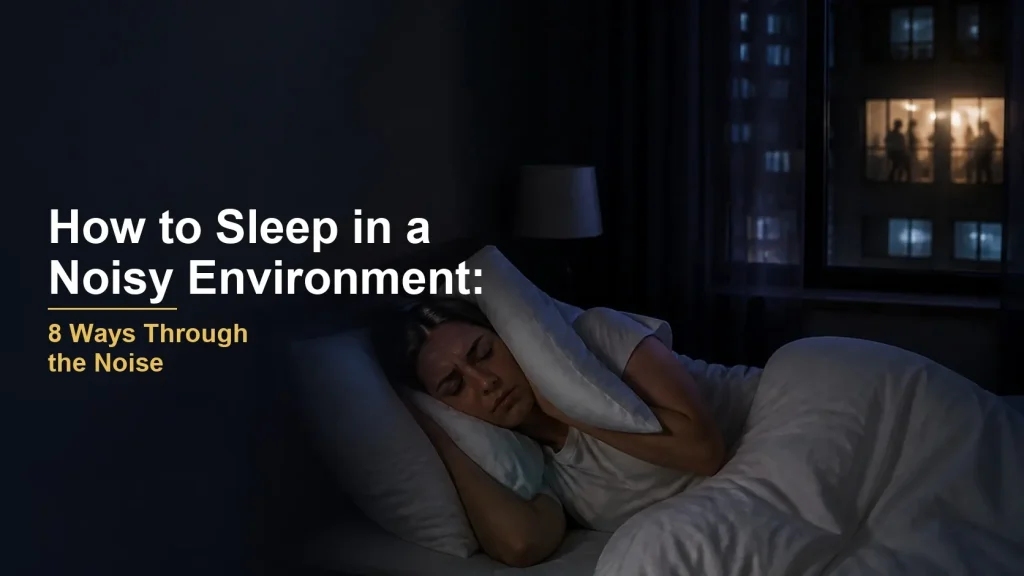
Traffic rumbling past, neighbors thumping around, a barking dog, a busy household — noise is one of the most common sleep-wreckers, especially in cities and apartments. Even sounds that don’t fully wake you can quietly fragment your sleep. The good news: you have real options. Here’s how to sleep in a noisy environment.
Why Noise Ruins Sleep
Your brain never fully switches off its hearing — it stays alert for potential danger even as you sleep. That’s why sudden, variable, or unpredictable noises (a car door, a shout, a snore) are so disruptive: they trigger brief awakenings or pull you into lighter sleep, often without you fully waking or remembering. The result is fragmented, less restorative sleep. The two main strategies are to mask the noise or block it — and ideally both. For a wider look at the underlying science, see published guidance.
Mask the Noise
1. Use a white noise machine or fan. A steady, even sound covers up intrusive noises so your brain has less to react to. White, pink, or brown noise (or a simple fan) creates a consistent backdrop that smooths over sudden sounds — one of the single most effective fixes.
2. Try calming sound or a sleep playlist. Soft rain, ocean sounds, or gentle ambient audio can mask noise while helping you relax, especially through a bedside speaker.
Block the Noise
3. Wear earplugs. Soft foam or moldable silicone earplugs are cheap and effective at cutting the volume of surrounding noise. They take a little getting used to but work well for many.
4. Try sleep earbuds. Comfortable sleep-specific earbuds can block noise and play white noise or calming sound right in your ears — the best of both worlds for stubborn noise.
Soundproof Your Bedroom
You can’t fully soundproof most rooms, but you can dampen a lot of noise:
5. Add soft surfaces. Heavy curtains, rugs, and soft furnishings absorb sound rather than letting it bounce around. Thick “blackout” curtains help block both light and some noise.
6. Seal the gaps. Much noise sneaks in through gaps — add a draft stopper under the door, weatherstrip windows and doors, and close any obvious openings.
7. Rearrange the room. Move your bed away from a noisy shared wall or the street-facing window, and place a bookshelf or wardrobe against a wall you share with noisy neighbors to add a sound buffer.
Address the Source (and Your Mindset)
8. Tackle the cause where you can, and relax into it. If it’s a fixable source — a chatty neighbor, a rattling appliance, a snoring partner — a polite conversation or simple fix can help. For noise you can’t control, relaxation techniques (like slow breathing) help you fall asleep despite it, and consistency helps your brain gradually habituate to familiar background sounds.
The Bottom Line
To sleep in a noisy environment, combine masking (a white noise machine or fan) with blocking (earplugs or sleep earbuds), and dampen what you can with heavy curtains, rugs, sealed gaps, and smart furniture placement. Address fixable noise sources, and use relaxation to drift off despite the rest. With the right mix, even a noisy city apartment can become a place you sleep soundly.
Frequently Asked Questions
How can I sleep in a noisy environment?
Combine masking and blocking: use a white noise machine or fan to cover intrusive sounds, and wear earplugs or sleep earbuds to reduce them. Dampen noise with heavy curtains, rugs, and sealed door and window gaps, and move your bed away from noisy walls or windows.
Why does noise wake me up even when I don’t fully wake?
Your brain stays partly alert to sound while you sleep, so sudden or variable noises trigger brief awakenings or pull you into lighter sleep — often without you fully waking or remembering. This fragments your sleep and leaves you less rested.
Do white noise machines help with a noisy environment?
Yes, they’re one of the most effective solutions. A steady, even sound masks sudden intrusive noises so your brain has less to react to, helping you sleep through disruptions like traffic, neighbors, or snoring.
How can I soundproof my bedroom for sleep?
You can dampen noise significantly: add heavy curtains, rugs, and soft furnishings to absorb sound, seal gaps with draft stoppers and weatherstripping, and place furniture like a bookshelf against noisy shared walls. Moving your bed away from the noise source helps too.
Are earplugs or a white noise machine better for noise?
Both help, and many people use them together. Earplugs reduce the volume directly, while a white noise machine masks sudden sounds with a steady backdrop. Sleep earbuds that play white noise combine both approaches for stubborn noise.

Sophia Bennett specializes in wellness and lifestyle content with a focus on sleep-related topics, stress management, and healthy routines. She creates easy-to-understand articles designed to help readers make more informed sleep and wellness decisions. Sophia covers the wellness side of sleep, stress, mental wellbeing, and the lifestyle changes that make rest more restorative.
All guides by Sophia BennettGeneral guidance, not medical advice. If a sleep problem persists or gets worse, speak to a qualified clinician. Medical disclaimer