How to Get Your Sleep Schedule Back After Thanksgiving Weekend
Thanksgiving weekend threw off your sleep. Here is how to reset your sleep schedule with a consistent wake time, morning light and a few gentle days of recovery.

Thanksgiving is one of the easiest ways to lose a solid sleep schedule. Dinner runs late, travel stretches the day, a glass of wine turns into two, and the next morning it feels reasonable to sleep until 10. Then Sunday night arrives, your mind is busy and your body is not ready for Monday.
Whether the feast is still ahead of you or the leftovers are already in the fridge, you can get your sleep schedule back without a harsh “reset.” A consistent wake time, some morning light and a few calmer evenings are usually enough.
Quick Summary
- Protect your wake time. Sleeping in a little is fine. A two- or three-hour lie-in makes Monday harder.
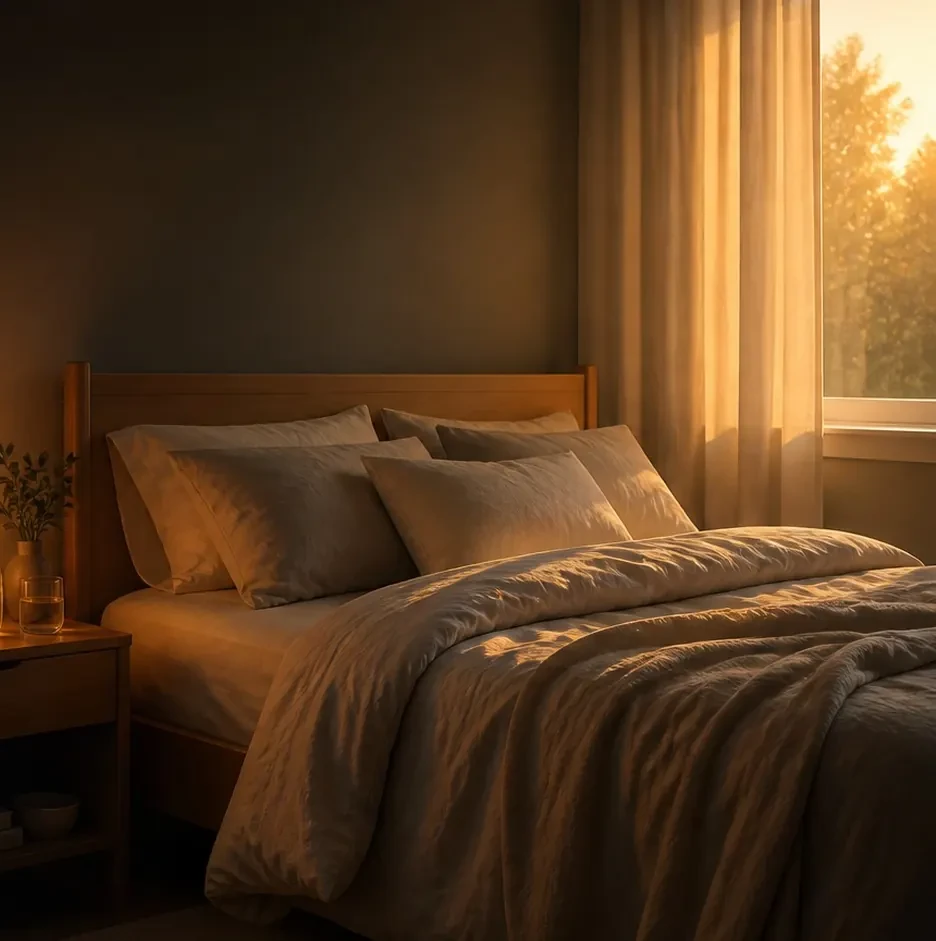
- Get morning light. Open the curtains or step outside after you wake up to help your body clock slide back.
- Don’t try to “catch up” in one night. A huge recovery sleep can push your schedule even later.
- Watch late meals, alcohol and caffeine. All three are common over a long weekend and all three can delay sleep.
- Give it a few days. One late night is not a lost cause. A gentle plan from Friday to Sunday is often enough.
- See a doctor if sleep problems linger. A disrupted holiday weekend is common. Ongoing insomnia is worth checking.
Why Thanksgiving Weekend Throws Off Your Sleep
Your body has an internal clock, called the circadian rhythm, that helps decide when you feel sleepy and when you feel alert. The Sleep Foundation notes that this clock is strongly influenced by light, and that irregular sleep times can throw it off.
A Thanksgiving weekend gives that clock several challenges at once:
- Later bedtimes and later wake times. This “social jet lag” is a short, self-made time-zone shift. Our guide to sleeping in on weekends explains why a long lie-in can make Sunday night worse.
- A late, heavy meal. A full stomach close to bedtime can keep you uncomfortable. See how to sleep after a big meal and whether turkey really makes you sleepy.
- Alcohol. A nightcap may make you drowsy, then fragment the second half of the night. Our article on alcohol and sleep covers why the sleep you get after drinking often feels less refreshing.
- Travel and unfamiliar beds. Guest rooms, couches and late drives all add strain. Holiday sleep tips can help if you’re not sleeping at home.
- Holiday stress and extra screen time. Planning, family conversations and late-night scrolling keep your brain switched on. If that’s the main issue, start with holiday stress and sleep.
None of this means you have to skip the fun. It just means your clock may need a short, kind reset afterward.

How Long Does It Take to Get Your Sleep Schedule Back?
It depends on how far you drifted. If you went to bed an hour later than usual for a night or two, many people feel close to normal within a couple of days. If you shifted by two or three hours all weekend, plan on several days of consistent wake times.
The Sleep Foundation’s guidance on sleep debt is useful here. You can recover some lost sleep, but you usually can’t do it with one marathon night. Oversleeping the next morning may also delay the following night’s sleepiness.
That’s why the goal after Thanksgiving is not to “make up” every lost hour at once. It’s to get your wake time, light and bedtime back near your normal pattern. If you want a longer, more structured plan, our guide on how to reset your sleep schedule in one week walks through a full seven-day approach. The steps below are the shorter, holiday-weekend version.
A Practical Plan to Reset After Thanksgiving
1. Pick a wake time and protect it
Choose the wake time you need for Monday, or no more than 30 to 60 minutes later. Then keep it as steady as you can on Friday, Saturday and Sunday.
This is the most important step. Your body clock takes stronger cues from when you get up than from when you try to fall asleep. If you sleep until 11 a.m. on Friday and Saturday, your brain will not be ready for a 6:30 a.m. alarm on Monday.
Set the alarm even if you don’t have to be anywhere. Put it across the room if you have to. Our tips on how to wake up without an alarm and how to stop hitting snooze can help if mornings are a struggle.
2. Get bright light as soon as you can
Light in the morning tells your circadian rhythm that the day has started. The Sleep Foundation notes that light is one of the strongest cues for the body clock.
Open the curtains right after you get up. If you can, step outside for 10 to 15 minutes, even if it’s chilly. A short walk, coffee on the porch or daylight at the kitchen table all count. On dark winter mornings, a brighter indoor lamp or a light therapy box can be a backup, used as directed.
3. Be careful with catch-up naps
A brief nap can take the edge off if you’re exhausted from travel or a late night. Keep it short, about 20 to 30 minutes, and finish it by mid-afternoon. A long or late nap can steal sleepiness from the evening, which is the opposite of what you want.
Our guide to how long a nap should be has more detail if you need one.
4. Ease your bedtime back, don’t force it
If you woke up late, you may not feel sleepy at your usual time. Don’t crawl into bed at 8:30 p.m. just to “be good.” Lying awake for an hour often creates more frustration than it solves.
Instead, start your wind-down at a regular time and go to bed when you feel drowsy. A simple routine helps: dim the lights, put the phone away, and do something quiet like reading, stretching or a short breathing exercise. The 10-3-2-1-0 sleep rule and our sleepy girl night routine are easy templates.
If you’re still wide awake after about 20 minutes, get up and do something calm in low light until you’re sleepy again. Our plan for what to do when you can’t sleep at night walks through it.

5. Go easier on leftovers, wine and late caffeine
You don’t have to eat a perfect diet all weekend. A few small tweaks still help:
- Move leftover dessert earlier in the evening when you can, so you’re not going to bed very full.
- Stop caffeine by mid-afternoon, or earlier if you’re sensitive. See caffeine and sleep for a simple cutoff.
- If you drink, give yourself a little buffer before bed and have some water. Alcohol can make the first part of the night feel sleepy and the rest of the night more broken.
- Dim screens in the last hour before bed, or at least use a calmer, darker setting. Blue light and screen time before bed is a common late-weekend trap, especially after long family chats or shopping.
A Simple Thursday-to-Monday Reset
Use this as a flexible checklist, not a strict protocol.
| Day | Focus | What to do |
|---|---|---|
| Thanksgiving night | Don’t start the slide too late | Enjoy the evening, then start winding down at a reasonable hour. Avoid a very late “second dinner” of leftovers if you can. |
| Friday | Set the tone | Get up within an hour of your usual time. Get daylight. Keep any nap short. |
| Saturday | Stay close | Same wake window. If you go out, try not to shift bedtime by more than an hour. |
| Sunday | Prepare for Monday | Keep the morning routine. Start your wind-down on time. If Sunday-night anxiety shows up, use a calm plan instead of staring at the clock. |
| Monday | Follow through | Get up with your alarm, get light and let the week pull you the rest of the way back. |
Sunday night is often the hardest part. That’s normal. Our guide to why you can’t sleep on Sunday night can help if your mind starts racing about the week ahead.
If You Traveled or Crossed Time Zones
A long drive can leave you overstimulated and stiff. A flight can add a real time-zone change on top of the holiday schedule. In that case, give yourself a little more time and lean on morning light at the destination.
Our guides to how to beat jet lag and how to sleep in a new place are more useful than trying to force an instant reset the night you get home.
If kids are off schedule too, start with their wake time and morning light as well. How to keep kids on a sleep schedule during the holidays has practical steps for the whole house.
The Bottom Line
You don’t need a perfect week after Thanksgiving. You need a predictable wake time, some morning light and evenings that aren’t later and later every night. Protect those, and your sleep schedule usually comes back within a few days. If you still can’t fall or stay asleep once the holiday rush is over, talk with a doctor or a sleep specialist.
FAQ: Sleep Schedule After Thanksgiving
Should I sleep in to catch up after Thanksgiving?
A little extra sleep is fine. Try to keep it to about 30 to 60 minutes past your usual wake time. A much later lie-in can feel good that morning and still make the next night harder.
Is it smart to go to bed extra early on Sunday?
Only if you actually feel sleepy. Going to bed far earlier than your body is ready often leads to tossing and turning. Start your wind-down early, then get into bed when drowsiness shows up.
How soon will I feel normal again?
Many people feel better after two or three consistent days. If the weekend shift was large, or travel was involved, it can take most of a week. Steady mornings matter more than one “perfect” night.
Can I use melatonin to reset faster?
Maybe, but it’s not the first thing to try after a long weekend. Morning light and a regular wake time are usually enough. If you’re considering a supplement, read our guide to melatonin for sleep and check with a doctor or pharmacist, especially if you take other medication.
What if my kids are off schedule too?
Keep morning wake times as steady as you can, get them daylight, and slide bedtime earlier in small steps rather than all at once. The family schedule often follows the earliest riser in the house.
This article is for general information only and isn’t medical advice. If you have ongoing trouble falling or staying asleep, loud snoring, gasping at night, or daytime sleepiness that doesn’t improve, talk with a doctor or a board-certified sleep specialist.
General guidance, not medical advice. If a sleep problem persists or gets worse, speak to a qualified clinician. Medical disclaimer